
Introductions
There are few series as well known in the farming sim genre as Bokujou Monogatari (formerly localized as Harvest Moon, but now localized as Story of Seasons), and the newest entry, Story of Seasons: Friends of Mineral Town, serves as a remake of some of the most well known and well loved games in this series. This entry gives an opportunity for newcomers to Mineral Town, and even to the series in general, to meet these characters, enjoy the locale, and experience the Mineral Town many veteran players grew up with in its own unique way. (If you wish to read a more veteran-focused review with direct comparisons to the original Harvest Moon: Friends of Mineral Town, we have one available here: https://ranchstory.news.blog/2020/07/08/story-of-seasons-friends-of-mineral-town-veteran-player-review/ ).
Storyline
The game begins by allowing the player to choose between one of four protagonists: the familiar Pete and Claire or the brand new Yuto and Naomi. You’re then free to customise your character’s name, birthday, and skin tone to provide a more personalized experience. If you wish, you can also change your clothes using the wardrobe provided in your house.
The story begins once your character has been decided. You learn that you’ve inherited your grandfather’s farm that you first visited as a child twenty years ago. Now a fully grown adult, your character is tasked with bringing the farm back to its former glory. After you’re given the basic introduction from the Mayor and offered a few optional tutorials on how things work, you’re given free reign to develop your farm and your life in Mineral Town as you wish. Some of the activities available in the town include attending festivals, befriending the townsfolk, and getting married to one of 16 different marriage candidates (regardless of gender!).
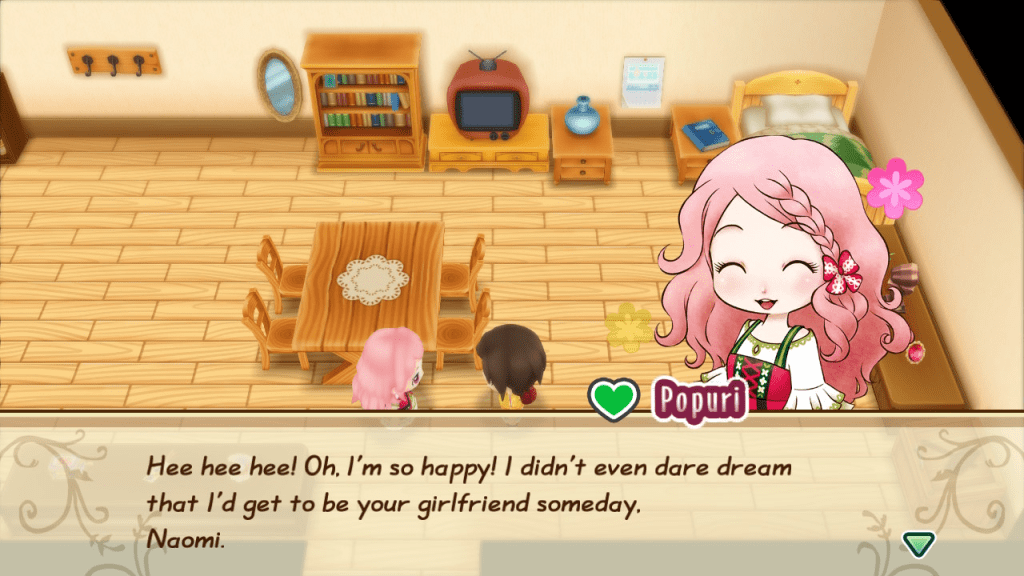
Getting to meet each of your neighbors and learn more about them is an absolute joy for someone who is new to the town. There are so many unique faces, and each of these characters have their own stories, ambitions, and goals. This makes the task of befriending each character very rewarding, making you want to put in the effort to earn their friendship and learn more about them. The abundance of events available will keep you coming back to the town daily, just to see who has a new story to tell next. Events are plentiful in this game, with well over one hundred available. Experiencing multiple events in one day is not uncommon, especially early on in the game. This system is not without its faults, however, as sometimes events have very specific requirements which make it difficult to pin down exactly how you trigger them without the use of a guide. The driving force of developing your friendships in the town is by giving gifts. These gifts can be almost anything, such as wild plants and food you’ve foraged, crops you’ve grown, byproducts from your animals, dishes you’ve cooked, or ore and gems you’ve mined. Each character has their own unique likes and dislikes, giving an added depth to their personalities.
Gameplay
The core gameplay involves planting, watering, and harvesting seasonal crops, which can then be shipped for money, used as ingredients for cooking a variety of dishes in your kitchen, or given to other denizens of Mineral Town to make them friendlier towards you. By using the tools given at the start of the game, the task of filling the farm field can seem daunting, as the initial tools only operate on one square of field at a time. However, with enough experience and materials that can be gathered from trips to the mine, your tools can be improved to work on a wider range of tiles at one time. This system rewards the player as you gain experience farming and exploring the mine, and never truly feels like a chore.
To supplement the income from growing crops, there is also a coop and a barn on the farm for raising animals. The ranching system makes caring for and raising animals a delight and is also an extremely good way to make money. There are several different types of animals available to raise, with chickens (available in regular and brown varieties) and Angora rabbits occupying the coop, while cows (available in regular, coffee, strawberry, and fruit varieties), sheep, and alpacas live in the barn. These animals must first be bought from vendors in Mineral Town using the profits made from shipping. The process of caring for animals has also never been simpler. There’s a bell outside both the coop and barn that will let the animals in the corresponding building out to graze when rung. This allows them to get their feed for the day on their own, provided you have grass growing for your barn animals. They’ll even return to the barn/coop on their own at 8pm, without needing to be rung back in. The animals may also be brushed and given treats to help advance their affection faster to lead to higher quality byproducts. Additionally, animals do not get sick or die, although not feeding them will result in less productive animals.
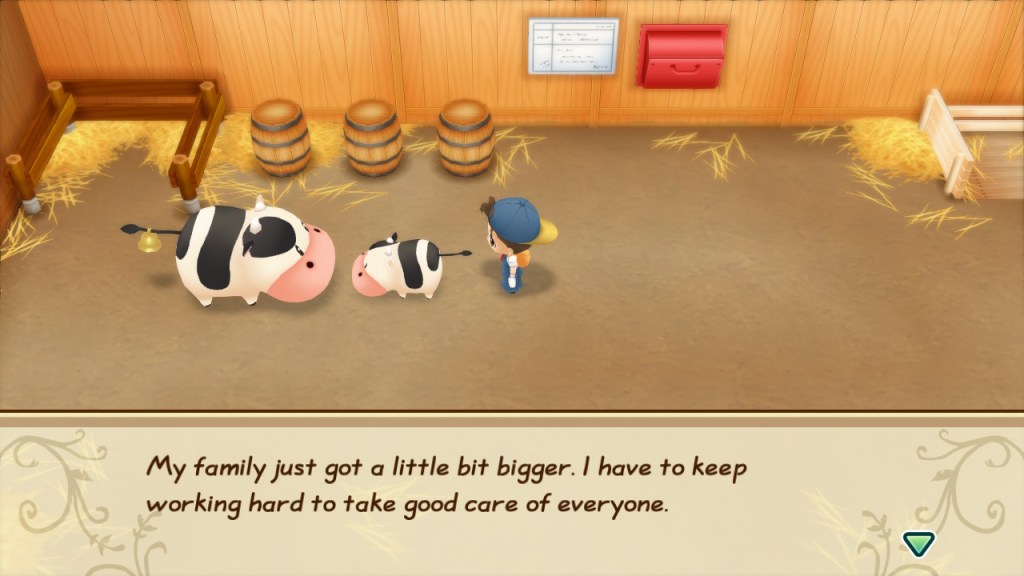
The one downside of the new system is that each animal bought from the vendors has a maximum heart count of five, which will only result in “good” quality byproducts – the second level of a six-level quality scale. In order to obtain the best quality byproducts, breeding your animals is necessary. This leads to days and even months of waiting for animals to breed just to advance the quality of the byproducts they’re providing, which can be frustrating. However, it does add a unique purpose to the breeding system not typically seen in the series. In addition to animals, the player can also raise several pets, with dogs, cats, capybaras, and penguins to choose from, and even a horse that the player can ride around town once it is fully grown. This wide array of animals provides an amazing base for creating the farm of your dreams.
These activities help form the daily gameplay loop, which is managed around the in-game clock, giving a time limit to what you can do each day. Early in the game, even with time stopping when you’re inside buildings, completing all the tasks before you can seem daunting. As you establish a daily routine, things begin to get easier, however it may always feel like time is moving just a little bit too fast.
Overall, the core gameplay is the same as it’s always been in the series, with several improvements and simplifications that make farming reminiscent of earlier entries in the series. Once you settle in a daily routine, it’s a very casual and relaxing experience.
Music
The music used in the game fits the tranquil atmosphere. The seasonal tracks wonderfully match the feelings of each season and don’t become repetitive even after thirty in-game days of hearing them. There are also several unique tracks that play when events are triggered that help break up the song that plays throughout the day. In a surprise move, there are also many throwback pieces that can be obtained that will be pleasantly nostalgic for many long time fans to hear again.
Graphics
The game returns to the nostalgic “deformed” (デフォルメ) style seen in earlier entries in the series, and while it seems simplistic at first, it gives the game a nice style that helps it remain visually interesting and easy to play throughout. Alongside the small overworld models, each character in the game has their own beautifully illustrated portraits that convey the characters’ emotions as they are conversed with. These portraits provide a much more detailed view of these characters and compliment the “chibi” style nicely. The HD graphics seen on the Switch and PC version truly allow these portraits to shine, with the PC version in particular providing a level of detail not yet seen in the series.
PC Specific Features/Settings
Available on Steam, the PC version of Story of Seasons: Friends of Mineral Town allows the game to truly shine by giving new graphics and control options beyond the already fantastic experience in the Switch version of the game. The PC version allows you to fully control your graphics settings using the expected resolution and graphic quality controls (such as anisotropic filtering, shadow, and anti-aliasing, just to name a few). The “chibi” style used in the game scales beautifully to any resolution, and the framerate remains consistent at 60 FPS. Moving between different parts of the town never results in long loading times. The controls are also fully customizable for both keyboard and controller in the settings, allowing you to play whichever way fits your style. The default mouse and keyboard controls work fairly well, with a cute custom mouse cursor being used. The PC version includes eight language options: English, Japanese, Korean, Chinese (both Simplified and Traditional), Spanish, French, and German, giving more accessibility to fans all over the world. Unique to this version is the inclusion of Steam Trading Cards. These additional collectibles can add a little bit more to the experience for completionists. Overall, the PC version is an equally amazing option for those who are looking for a different way to experience Mineral Town.
JP/ENG Translation Differences
Overall, we were expecting a strong translation from XSEED, and this was mostly delivered. The characters’ unique personalities shine through clearly. However, some liberties were definitely taken, especially in regards to the choice options in events. Many answers that were straightforward in Japanese have been localized in English as heavily sarcastic or overly humorous. While this will definitely cause amusement for many fans, it can be confusing for others, especially for those who have trouble detecting sarcasm or are not fluent speakers. Additionally, Brandon’s original personality of a casual, asocial loner just doing his own thing seems to have been changed into a pretentious “artiste” type.
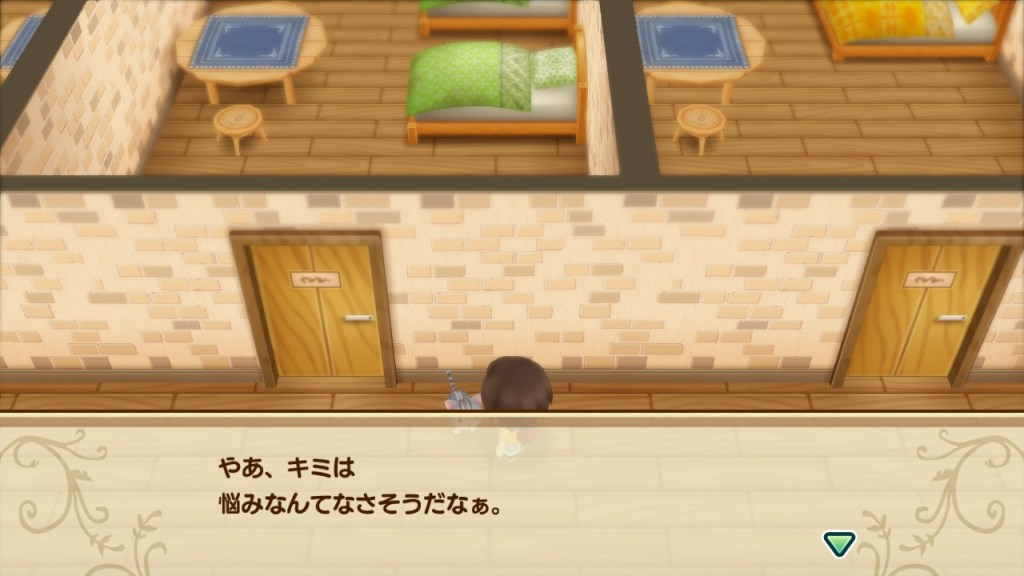
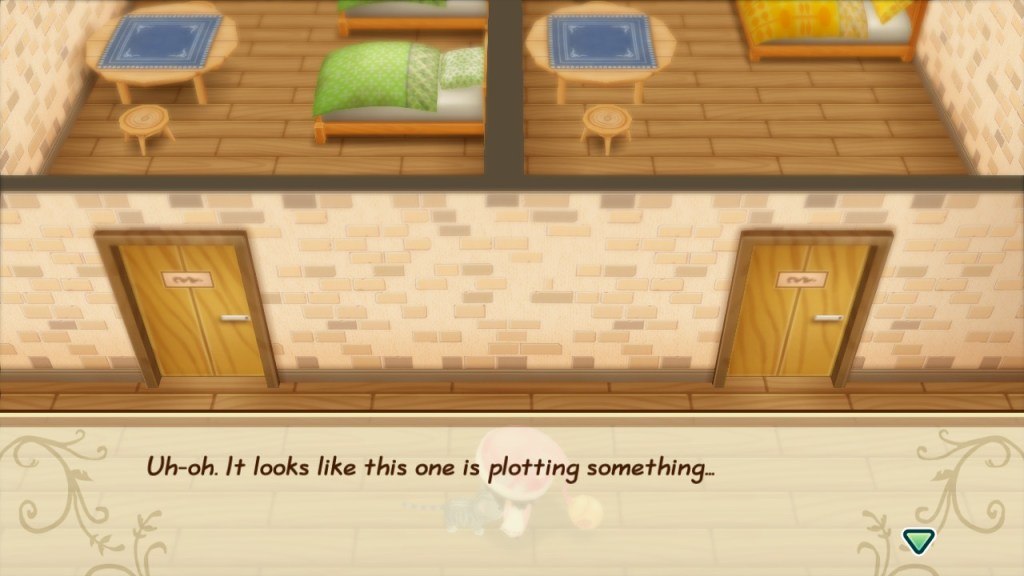
Although not overly extensive, various lines have been changed for more humorous appeal, even adding in some meme references. Notably, a bizarre change occurs with the cat that hangs out in the second floor of the Inn. The cat that “seems to have no worries” in the Japanese version inexplicably “looks like [it] is plotting something” in the English version. From a spelling and grammar standpoint, the translation is very professional with minimal errors.
Final Thoughts
Whether you’re a long time fan of the series meeting this quaint town for the first time or a newcomer beginning your journey into the world of Bokujou Monogatari, there’s no better place to begin your adventures in Mineral Town. The game will keep you entertained and relaxed as you grow your farm your own way, while working towards making friends, and maybe even a family, all at your own pace.
RanchStory Score
With all these factors in mind, we have given Story of Seasons: Friends of Mineral Town a RanchStory score of 9 Golden Turnips out of 10. This is one trip to Mineral Town you won’t want to miss!
 Ranchstory News Blog