
Setting out to be a new take on the series, including new mechanics, setting, theming, and even a new director, Rune Factory: Guardians of Azuma has a lot of questions to answer and, as the first entry for a new console generation, expectations to surpass. After my time with the game, I feel that while there are some rough edges, Guardians of Azuma is a thoroughly enjoyable breath of fresh air for the series.
This review was primarily played on Nintendo Switch, though some comparisons are made to other platforms.
A New World to See
From the outset, Guardians of Azuma sets itself apart from its predecessors in scope and theming. The Japanese-inspired fantasy setting feels fresh, and shortly after the start of the game you’ll find that you’re not just being confined to a single village and its immediate surroundings again. While not exactly an “open world,” there’s easily more places to explore than in any previous game in the series, literally and figuratively soaring above its predecessors. By the end of the game, it was easy to feel like Azuma as a setting was an interesting and well-realized setting, with plenty of its own lore and quirks to explore.

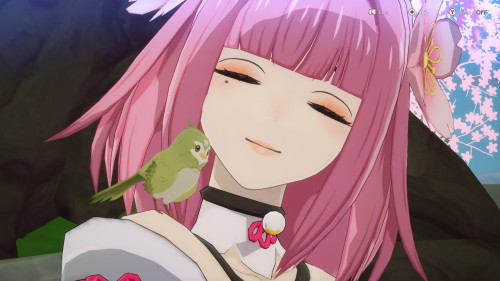

Azuma is undeniably a pretty place, with lots of nicely designed environments, set-pieces, and inhabitants in vibrant colors. With the characters being one of the strongest selling points of the game, it’s nice that they not only look great, but many of them have their own distinct animations while idling and expressing themselves during cutscenes in a way that the static portraits of previous games in the series never managed to achieve.
Unfortunately, while the strong art style and use of colors helps bridge the gap, it’s hard not to find the Nintendo Switch version specifically a little lacking compared to other platforms. There is frequent detail pop-in, with shadows and textures nearly constantly in flux somewhere on-screen while you’re running around. This is an issue even during cutscenes at times, where it seems the level of detail can’t keep up with the camera’s movements; a great disservice to otherwise enjoyable event scenes.


Zoomed-in examples of detail shifting in the background of a cutscene.
Fortunately for those who don’t have access to a PC or Nintendo Switch 2, the game still runs well overall. Loading times are relatively speedy, and the framerate doesn’t have too many issues keeping up even when there are plenty of enemies, effects, or items on-screen. A very welcome and noticeable improvement when compared to Rune Factory 5.
Life in Azuma
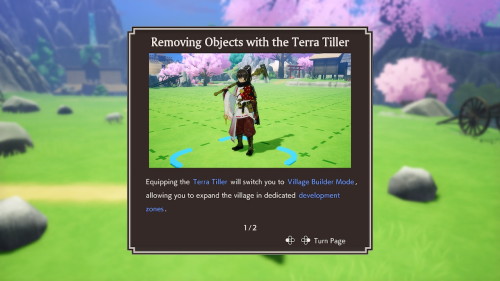
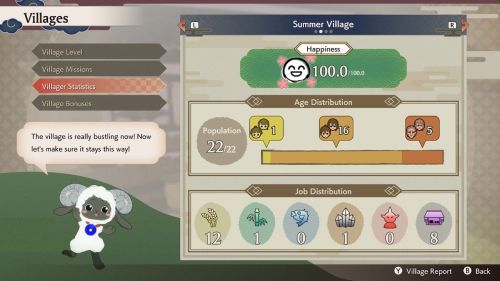
One of the most drastic changes for players that are used to the typical farming sim fare will probably be that traditional farming isn’t really a focus at all in Guardians of Azuma. Instead, as Village Chief, you’ll largely be benefiting from your villagers managing farmland for you while you place buildings, decorations, and other resources. Designing your town is simple and intuitive, and each distinct addition, whether it’s a new business or a cute little Lucky Cat statue, will provide an immediate benefit by increasing your stats and working towards the town’s overall growth, unlocking new development zones along the way. It’s a very different feeling system, but still a fun and rewarding one as you balance the needs of your villagers, maximizing your stat boosts, and just making something that you like looking at.
Villagers aren’t always perfect though. Often, some negative traits get in the way, so you’ll still need to go over their homework to keep the fields running if you’re too soft-hearted to evict them. If everything’s going smoothly, you’ll be making more money than it costs to feed everyone while hardly ever lifting a finger. So long as everyone’s happy, I’m sure they won’t mind when you use the money they generate on crafting a shiny new bow instead of building more housing.


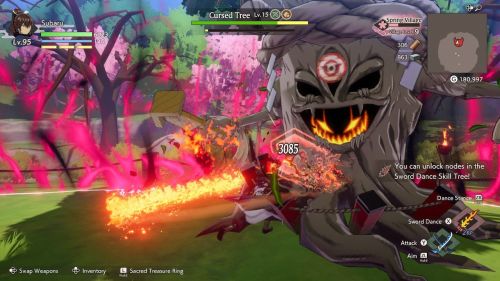
Speaking of a bow, it’s one of the tools you’ll always have on hand while exploring the more dangerous parts of Azuma, along with whatever you use as your main weapon and the Sacred Treasures you earn while progressing through the story. There’s not as much weapon variety as in previous games, but none feel exceptionally stronger than the others, so it’s nice to just use whatever feels best at the moment. Sacred Treasures also help provide some variety, allowing the use of other non-standard fighting styles such as punches and elemental magic attacks that can generally cut through any standard enemy so long as you have the RP to use them.
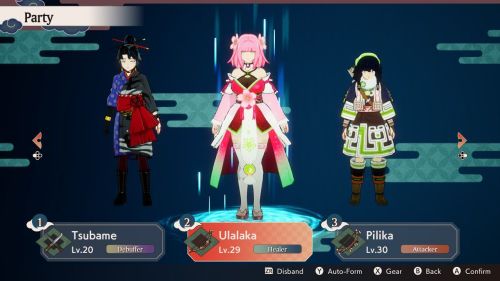
If you need any help, you can also recruit up to six monsters or characters you’ve bonded with to journey with you. Each one has their own specialty and some bring along skills the player doesn’t have access to, like Hina’s lasso-like Spell Seal for binding enemies in place. While exploring, characters will also sometimes talk among themselves, with some amusing interactions that might even hint at things you haven’t really learned about them yet.

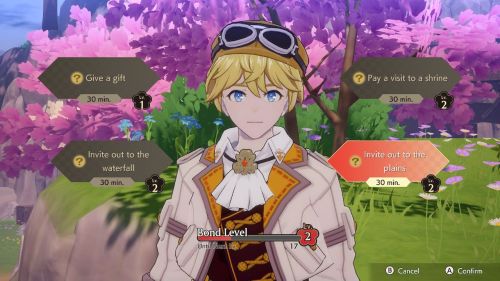
Forging those bonds can also be much more engaging than the standard farmsim fare of just giving everyone their favorite item every day, though that option is still available as well. While speaking with both potential love interests and the supporting cast, you can choose to hang out, which uses time as a resource to do various activities. Just like with giving gifts, each character has different things they like to do, with more options unlocking as you get closer and learn more about them. It’s a much more natural way of getting to know someone, and several interactions don’t just include cute little animations, but also some short dialog scenes, such as having a discussion over dinner or cuddling up while sharing an umbrella that’s maybe a little too small for two people. It’s left me wanting this socialization dynamic for future Rune Factory games and wishing for it in past games – we’ll have to wait and see if it makes a reappearance.
One of the best qualities for how the characters are handled is probably just that almost everyone gets to participate in the overarching story to some degree. This review is aiming to generally be spoiler-free, but suffice to say that it’s probably the most memorable and well executed story in the series and hovers around a minimum of 40 hours to complete if you still do a bit of farming and socializing between objectives.


Closing Thoughts
Rune Factory: Guardians of Azuma is a wonderful, unique entry in the series, and very possibly the best so far. While it does do a lot of things differently, the new ways to play are fun and show a lot of promise if they continue to take the series in this direction. Whether this is your first Rune Factory or you’re a long-time fan, this is a must-play for fans of the genre.
Additional coverage and a second review that includes more focus on PC and Steamdeck performance will be shared soon.
Review codes provided to Ranch Story staff by XSEED and Marvelous Europe.

 Ranchstory News Blog